
Cybersecurity for Food and Beverage Manufacturers: What CEOs Need to Know
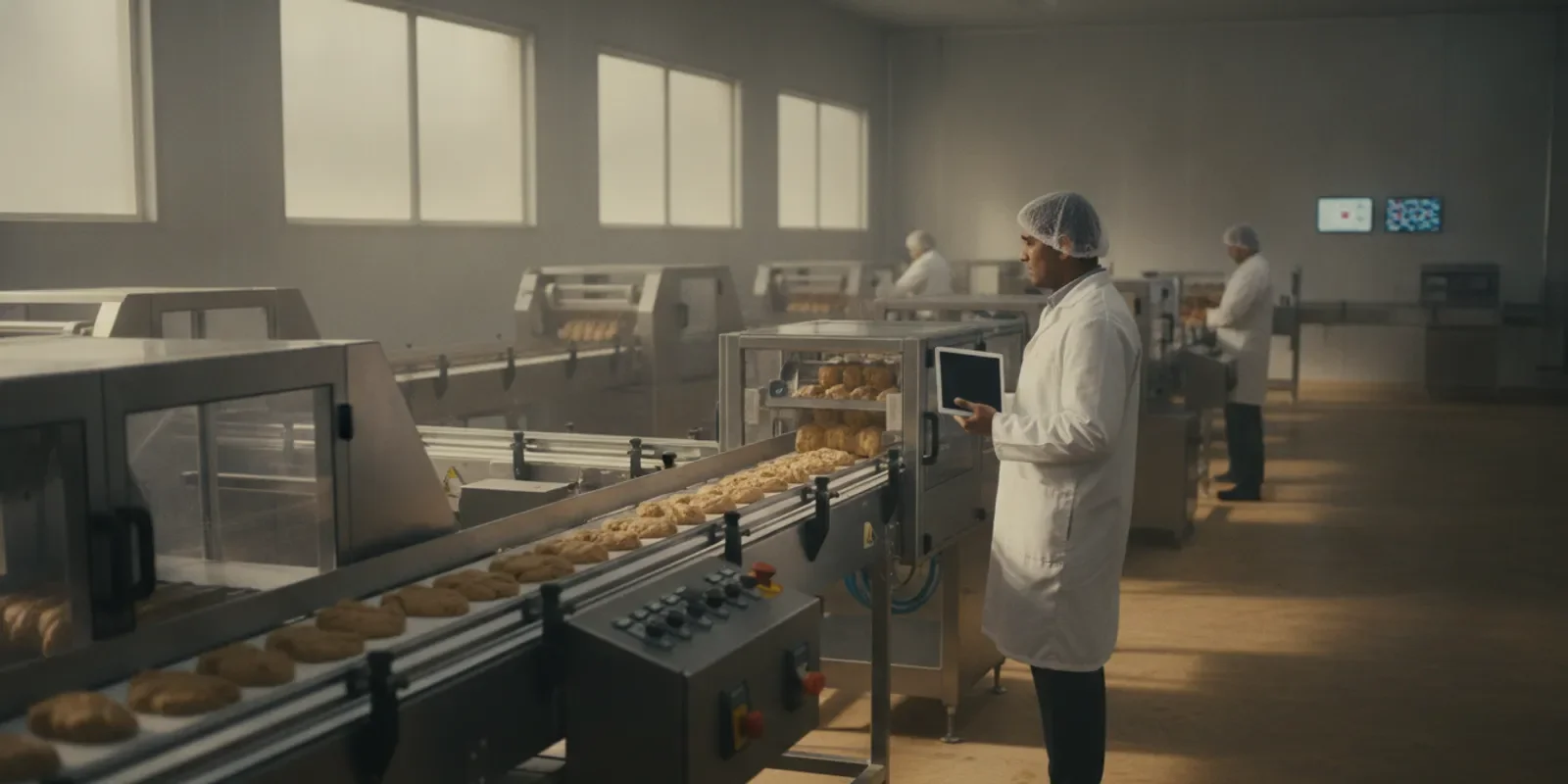
Cybersecurity for food and beverage manufacturers is an operational issue, not just an IT concern. Production lines, business systems, suppliers, and traceability records all depend on technology that must work reliably and keep information trustworthy. This guide focuses on practical executive decisions for food companies, alongside broader cybersecurity leadership guidance for mid-market organizations.
Schedule a free IT Strategy Call with Geoff Pope
The cybersecurity risks food manufacturers often overlook
Many food businesses have expanded their use of digital systems without treating every connection as part of the security picture. A company may have an ERP system for purchasing and production planning, warehouse tools for inventory, cloud applications for finance, remote access for equipment support, and operational technology (OT) on the plant floor. Different teams may manage each of these systems. Risk often sits in the connections between them.
The consequences can extend beyond stolen files. A cyber incident may interrupt production, delay shipments, disrupt order fulfillment, affect product or lot records, or make it difficult to coordinate with suppliers and customers. The exact impact depends on the facility and its systems. The executive task is to understand which business processes depend on technology and how the company would respond if one of those dependencies became unavailable or unreliable.
Food-specific risks are not always obvious in a standard IT inventory. Consider equipment that was installed years ago and still performs a critical task. Its operating system may be difficult to update, the vendor may need remote access to maintain it, or the plant may rely on a shared account that is rarely reviewed. A production system may also communicate with the business network for scheduling, reporting, or quality data. These arrangements can be operationally useful, but they need clear ownership and safeguards.
The Food Protection and Defense Institute at the University of Minnesota notes that food-industry industrial control systems may be particularly vulnerable, including because some are old. That is a reason to assess legacy equipment and access paths deliberately, not a reason to assume every older machine is compromised. A useful starting point is the institute's research on food and cybersecurity.
Other overlooked exposures include:
Unclear ownership. IT, engineering, operations, quality, and outside vendors may each own part of a system, while no one is responsible for the whole risk.
Remote support that never gets revisited. Vendor access may remain active after a project or service change. Access should be approved, limited to a defined purpose, and removed when no longer needed.
Backups that have not been tested. A backup is useful only if the company can restore the necessary systems and data in a reasonable, understood sequence.
Shared or excessive permissions. When people use common accounts or retain access after changing roles, it becomes harder to see who did what and to limit the impact of a compromised account.
Supplier and service dependencies. Ingredient suppliers, logistics providers, software vendors, and maintenance partners may exchange data or connect to company systems. Their role in continuity and incident response should be known.
Manual workarounds. Paper records or local spreadsheets may keep a process moving during an outage, but they can introduce errors or make later reconciliation difficult if no procedure exists.
Cybersecurity should therefore be discussed in terms of business services: which processes must continue, which data must remain accurate, and who makes decisions when systems are disrupted. That framing connects security work to production continuity and customer commitments, rather than treating it as a list of technical products.
FSMA 204 and what it means for your IT and data security systems
FSMA 204, the Food Traceability Rule, raises the importance of reliable food traceability records for covered foods and activities. It calls for covered entities to maintain specified records, including key data elements associated with critical tracking events. The rule is about traceability recordkeeping. It should not be described as a general cybersecurity standard or as a mandate to buy a particular technology.
Still, traceability depends on data and processes that must be available, complete, and usable when needed. A company may rely on ERP, warehouse management, quality, supplier, shipping, or specialized traceability systems to create and retain records. If information is spread across systems, entered manually, or exchanged with business partners, leaders should understand how those records are protected and how the company would access them during an interruption.
Start by mapping the information flow rather than assuming a single application contains the full record. For each relevant product or process, ask:
Where is each required record created, and which role is accountable for its accuracy?
Which systems, spreadsheets, paper forms, or partner platforms hold or transmit the information?
Who can change, export, or delete records, and are access rights reviewed?
How are records backed up, retained, and restored if a system is unavailable?
Can the company identify which data came from a supplier, facility, or internal process?
What is the approved procedure for recording events when a system is offline and reconciling them later?
These questions connect compliance readiness with information security without confusing their purposes. Quality and regulatory leaders should determine which records apply to the company's products and activities. IT and security leaders can then assess the systems, access, data flows, and recovery arrangements supporting those records. Operations needs to confirm that any proposed controls can work in the actual production environment.
For example, a traceability process may depend on a supplier portal, an employee entering receiving details, and a warehouse system updating lot information. If the portal is unavailable, the business needs a known alternate process. If a user account is compromised, the company needs a way to limit further access and determine whether records changed. If records are restored from backup, the team needs to know how to reconcile them with transactions completed in the interim. A documented process is more useful than a vague expectation that staff will improvise.
Companies should verify current applicability, recordkeeping details, and regulatory timelines with qualified regulatory counsel or their compliance lead. Requirements can depend on the organization's role and products. Security planning supports dependable recordkeeping, but does not replace a legal or regulatory applicability assessment.
OT vs. IT security in food and beverage: what the difference means for you
Information technology (IT) generally supports business information and services, such as email, finance, identity management, and ERP. Operational technology (OT) monitors or controls physical processes, such as production equipment, packaging lines, refrigeration, or building and plant systems. The boundary is not always neat. Manufacturing environments increasingly exchange data between production and business systems, and a connection can create dependencies across both.
IT security commonly emphasizes confidentiality, integrity, and availability. In OT, safe and predictable operation may be especially important. A security change that is routine for an office laptop could interrupt a validated or finely tuned production process if applied without coordination. At the same time, avoiding every change indefinitely can leave known weaknesses unaddressed. The answer is not to separate the teams completely; it is to plan changes around operational risk, vendor support, and business priorities.
AreaTypical concernExecutive questionPractical control to assessBusiness ITAccounts, business applications, and confidential recordsCan access be limited and restored if an account or service is compromised?Named accounts, appropriate permissions, tested recovery, and review of critical vendorsPlant OTSafe, reliable operation of production and facility equipmentWhich systems cannot be interrupted, and who approves changes?Asset inventory, change coordination, supported maintenance, and documented recovery stepsIT/OT connectionsData flows and remote access between business networks and equipmentWhat needs to connect, for what purpose, and who can use the path?Documented connections, restricted access, monitoring appropriate to the environment, and periodic reviewTraceability recordsAccuracy, availability, and retention across systems and partnersCan the team find and explain the needed records during an outage?Defined ownership, backup and restore tests, alternate procedures, and reconciliation steps
An OT/IT inventory does not need to be a perfect technical map before leaders can make decisions. Start with critical production processes and trace the systems, equipment, vendor connections, and records those processes depend on. Identify where the map is incomplete, who can answer questions, and what requires an on-site assessment. For food producers, a focused review of IT priorities in food and beverage operations should account for the realities of production and supply chain work.
Useful governance questions include who approves remote access, how plant changes are scheduled, how emergency access is handled, and how the company would isolate a system without creating an unsafe or unworkable production condition. Security controls should be designed with engineering and operations, not imposed on them after the fact. If an outside equipment provider needs access, define the business owner, scope, duration, and process for oversight.
How a fractional CISO helps food companies build a compliance-ready security program
A fractional CISO provides senior cybersecurity leadership on a flexible basis. This can help an organization that has capable IT and operations staff but needs executive-level direction, risk prioritization, or a stronger connection between security and business decisions. The role is not a substitute for plant engineers, regulatory counsel, internal IT administrators, or a managed service provider. It helps leadership coordinate the work and make accountable choices.
For a food manufacturer, that work can begin with a practical risk assessment: critical business and production processes, important information, system dependencies, known vulnerabilities, vendor access, and recovery arrangements. The assessment should distinguish facts from assumptions. For example, the company may know that a production system is older but not yet know whether it is supported, exposed to other networks, or dependent on a vendor account. Each unknown can become a defined follow-up instead of an unsupported conclusion.
Next, a security leader can help executives prioritize a sequenced plan. Some actions may be straightforward, such as removing former users, documenting system owners, or testing a restore process. Others may require engineering review, a vendor-supported change window, or capital planning. A useful roadmap states the risk addressed, business owner, dependencies, expected effort, and decision needed. It does not assume every issue can or should be solved at once.
A fractional CISO can also help establish incident readiness. That means clarifying who can declare an incident, who contacts leadership and outside providers, how the company preserves relevant information, and how communications with customers, suppliers, insurers, or regulators are coordinated. The plan should include scenarios that matter to the company, such as unavailable order systems, inaccessible production data, or uncertainty about the integrity of records. A tabletop exercise can test whether the plan is usable before a real disruption.
Compliance-ready security is built through clear responsibilities and evidence of repeatable processes. Depending on the company's needs, that may include access review records, asset and vendor inventories, incident procedures, recovery test results, or change approvals. A CISO can help leadership see how these activities support both risk management and compliance work, while the quality or compliance function remains responsible for interpreting applicable requirements.
For context on the scope of Fractional CISO services, executives can review how cybersecurity leadership may cover risk assessment, incident planning, vendor oversight, and governance. Food companies can also compare that leadership role with broader Fractional CIO support for IT strategy and operations. The right division of responsibility depends on the existing team and the problems the company needs to solve.
When evaluating outside leadership, ask who will participate, how recommendations will be grounded in the company's environment, and how work will be coordinated with internal IT, engineering, operations, and quality teams. Turning Point Advisory describes its founder-led approach and industry-focused advisory work on its site. A provider should be able to explain how it will remain independent when assessing technology vendors and proposed solutions.
What to prioritize first if you are starting your food manufacturing security program
A new program does not need to begin with a large platform purchase. Begin with a shared picture of the business, its critical dependencies, and the decisions leaders need to make. The following sequence can help turn a broad concern into manageable work.
Name an executive sponsor and working owners. Include IT, operations or engineering, quality or compliance, and relevant business leaders. Assign a clear owner for each important process and system, even when a vendor provides support.
Identify critical operations and records. List the production, shipping, finance, and traceability activities that would cause material disruption if unavailable or inaccurate. Note which products, sites, and partners are in scope.
Build a usable asset and dependency list. Capture major business applications, plant systems, network connections, remote support paths, owners, and recovery dependencies. Mark uncertain items for validation rather than treating the inventory as complete.
Review identity and vendor access. Remove access that is no longer needed, reduce shared accounts where feasible, establish an approval path for remote access, and set expectations for vendor notification and support.
Test recovery and manual procedures. Choose one or two critical processes and walk through what happens if a system is unavailable. Confirm backups can be restored, assign decision makers, and document how offline work is recorded and reconciled.
Set a change and patching process that accounts for OT. Work with system owners and vendors to understand support status, test requirements, safe maintenance windows, and compensating safeguards when immediate updates are not feasible.
Practice a realistic incident scenario. Bring decision makers together to work through detection, containment, production impacts, record integrity, external communication, and return to normal operations. Capture gaps and assign actions.
Review progress on a regular schedule. Track owners, due dates, unresolved decisions, and changes in operations or suppliers. Revisit priorities when the company adds facilities, equipment, products, or technology dependencies.
These steps create a practical foundation, but they are not a one-size-fits-all control checklist or a guarantee of compliance. A multi-site manufacturer with legacy equipment may need a different sequence from a newer facility with cloud-managed production tools. The important thing is to base decisions on the company's actual process and system dependencies, then revisit the plan as they change.
Executives who want an outside perspective can use a no-obligation conversation to discuss their priorities and determine whether further support makes sense. A structured review of IT priorities can also help leadership connect immediate concerns to a broader roadmap.
Talk with Geoff Pope about your food manufacturing security priorities
Frequently Asked Questions
Does FSMA 204 require a company to buy cybersecurity software?
No. FSMA 204 is a food traceability recordkeeping rule, not a general requirement to purchase cybersecurity software. Companies should confirm which recordkeeping requirements apply to their activities, then assess how to protect and maintain the systems and information that support those records.
What is the difference between cybersecurity and food traceability?
Traceability concerns the ability to maintain and use information about specified food events and records. Cybersecurity helps protect systems and information from unauthorized access, disruption, or change. They are distinct disciplines that overlap when digital systems create, store, or exchange traceability information.
Should IT and OT be on separate networks?
There is no single network design that fits every facility. Leaders should understand which connections are needed, limit them to a defined business purpose, and involve qualified IT and engineering staff in evaluating safe, workable safeguards. Any change should account for equipment requirements and production continuity.
When should a food manufacturer consider fractional CISO support?
Consider it when leadership needs a senior owner for security priorities, incident readiness, vendor risk, or governance, but does not need or cannot justify a full-time CISO role. The value depends on the organization's risks, internal capabilities, and scope of work; it is not a substitute for technical implementation or regulatory counsel.
Food manufacturers can make cybersecurity more manageable by connecting it to production continuity, reliable records, and clear accountability. Start with the systems and processes the business depends on, then prioritize improvements with the people responsible for keeping operations running.
